
In the Gulf, trust runs through the circle: how to get in
Fresh numbers from Saudi Arabia and the Gulf show trust is built in the close circle. How can a seller get in without being an unwelcome stranger?

Anyone who sells to companies in the Gulf knows the feeling: a thoughtful message, a strong offer, a fair price, then silence. Two months later, you hear the same company signed with a less experienced vendor because "someone introduced them."
It isn't luck, and it isn't "wasta" in the negative sense. Recent data says this is simply how trust is built in our region, and sellers who understand it close faster.
What do the numbers say?
Trust starts in the close circle. In the 2026 Edelman Trust Barometer, 64% of respondents in Saudi Arabia said they are hesitant or unwilling to trust someone who differs from them in values, sources, or background. Even among them, trust in "my CEO" and "my neighbours" was almost as high as trust in government leaders.
Community is the currency. Business of Fashion's report on Gulf consumers (January 2026) cites Euromonitor: over 70% of Gulf consumers are more likely to buy from a brand that works with local ambassadors they recognise and trust. One speaker in the report puts it simply: "Community is not just a marketing lever in the Gulf; it's a currency of trust."
A friend's recommendation weighs as much as the big platforms. The Saudi Center for Opinion Polling's "Saudi Generations" study found that friends' recommendations carry almost the same weight as social media when people choose books, while traditional media influences just 4%.
And an automated message is no substitute. In Ipsos research for Snap and WPP (2026), 65% of respondents in Saudi Arabia found hyper-personalised AI ads intrusive. In Kantar's Media Reactions 2026, only about a quarter of consumers said they trust AI assistants' brand recommendations.
These figures describe consumers in general, but the decision-maker at a company is the same person once they're back at their desk.
Why does the cold message fail?
Because it arrives from outside the circle. The recipient doesn't first ask, "Is this a good offer?" They ask, "Who is this? Who knows them?" Without an answer, the message stops right there, however good it is.
The irony is that better wording alone won't fix it. A perfect message from a stranger is still a message from a stranger.
Five ways into the circle
1. Ask "who knows whom?" before you write
Before messaging a new company, ask yourself, your team, and your current clients: who do we know there, or who knows someone there? One introduction from a trusted person opens a door that ten messages won't.
And when anyone replies, even with a no, ask kindly: "Do you know someone who might benefit from this?" Most people like to help when asked respectfully.
2. Start from a published event, not from yourself
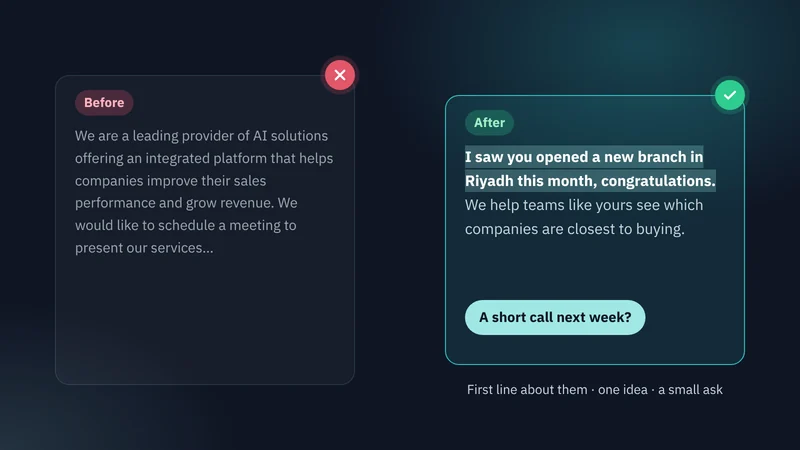
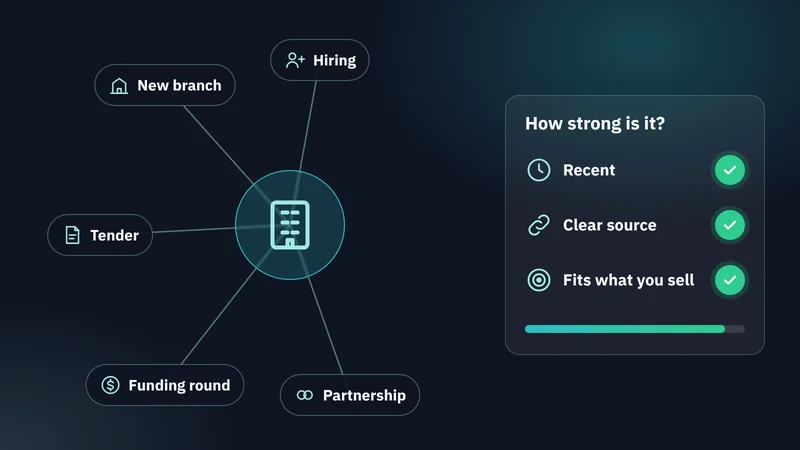
Without an introduction, the best bridge is public news about the company: an expansion, a new project, a new appointment. Citing the news with its date and source tells the recipient: "I follow what's happening at your company; this isn't a mass email." And watch the other edge: never mention personal details the person didn't publish themselves. That is what turns a message from "attentive" into "intrusive."
3. Be the local face, or work with one
If you sell from outside the country, a local partner isn't a luxury. Someone in Riyadh or Dubai whom people know, who attends the gatherings and speaks the market's dialect, saves you months. It doesn't have to be a co-founder; a commission-based commercial partner is often enough.
4. Let your clients talk about you
A satisfied client in Saudi Arabia telling a peer "we tried them and they delivered" beats any campaign. Ask happy clients for two simple things: an introduction to two people they know, and permission to name them as a reference when someone asks about you.
5. Think long-term relationship, not quick deal
In the same Edelman report, when respondents in Saudi Arabia were asked how a company from abroad could earn their trust, the top answer was hiring people from the community (46%), followed by long-term community projects (42%). Trust here is built through steady presence: useful content, showing up at events and gatherings, and following up without pushing.
What destroys trust fast?
- Repeated messages with no reply.
- A message that reads as if written for everyone.
- WhatsApp to a personal number the owner never gave you.
- Pushing after a "no."
- Big promises with no proof: "We'll transform your whole company."
In a market where people talk to each other, one bad experience travels as fast as a good one.
The bottom line
In the Gulf, you don't sell to a company; you enter a circle. The way in runs through three things: someone who introduces you, a published reason that justifies reaching out now, and patience that turns a first contact into a relationship.
Modern tools, AI included, help you know who and when. But the one who speaks is still a person people know by name and can ask about.
At Deloni, we build on this idea: AI finds the companies that need your service now, from published news with its date and source, and you are the one who speaks. Start free on your website.
Sources:
- Edelman Trust Barometer 2026: Saudi Arabia Report.
- Business of Fashion × Snap Inc., Building Brand Resonance With Gulf Consumers, January 2026 (citing Euromonitor).
- Saudi Center for Opinion Polling, Saudi Generations 2024 (published December 2025).
- Snap Inc., WPP and Ipsos, Navigating the Age of AI, 2026.
- Kantar, Media Reactions 2026.
Comments (0)
No comments yet. Share your view or experience.